
"Integrating diverse lived experiences into problem framing helps uncover blind spots early and enables urban strategies that are resilient, locally and socially grounded, and investable”
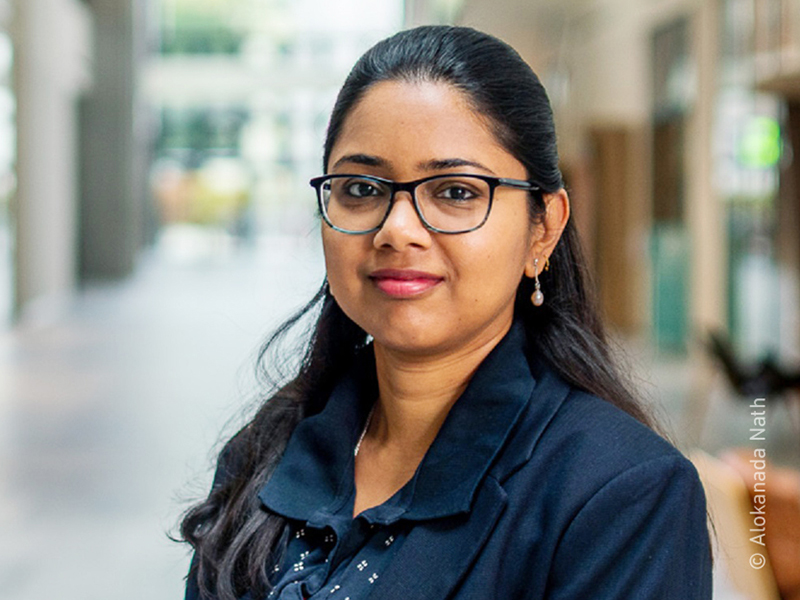
Bridging ambition and action, Alokananda Nath, urban planning expert and project manager at Frankfurt School of Finance and Management, shows how cities can turn climate goals into socially grounded, investable solutions - by embedding finance and governance into everyday urban planning.
Your career spans urban governance, climate resilience, and sustainable finance. How did your interest in these intersecting areas develop, and in the face of increasing climate pressures in 2025, what keeps you motivated to drive this transformation?
My professional trajectory has been shaped by a consistent focus on urban governance and the realisation that climate resilience outcomes are ultimately determined by institutional and financial capacity. Working with the cities facing heat stress, flooding, and informal growth, I repeatedly saw that climate resilience was not a technical problem, but a governance and financing one. My engagement in the realm of urban policy highlighted that even technically sound climate strategies often failed due to fragmented governance structures and limited access to appropriate financing instruments. Having had such experience and given that my academic background was not in financing, I tried to explore more deeply the avenue that sustainable finance provides as a means of enabling implementation rather than as an end in itself. Across different regional contexts, I observed that cities with similar climate risks experienced vastly different outcomes depending on their ability to align planning, budgeting, and investment frameworks in order to mitigate those risks.
In 2026, my motivation is reinforced by the urgency of climate impacts on urban systems. We are all living in an era of “changed climate” and in my experience municipal governments are no longer planning for future risk but managing present disruption, making the integration of climate finance and governance both urgent and unavoidable.
Having worked across the EU, MENA, and India, what are the most striking differences - or perhaps surprising similarities - you’ve observed in how cities approach the dual challenge of inclusive development and climate adaptation?
I have been fortunate enough to work across geographies on comparable issues and what has surprised me most is the similarity across all regions that is of fragmented decision-making between various government departments and stakeholders. Across the EU, MENA, and India, the most visible differences lie in institutional capacity and fiscal autonomy, while the most striking similarities relate to governance fragmentation. European cities generally benefit from stronger planning frameworks, whereas cities in the MENA region and in India often demonstrate greater adaptability under constrained resources.
Despite these differences, cities across all regions face common challenges in integrating inclusive development with climate mitigation and adaptation, particularly where climate policy, infrastructure planning, and social services operate in silos. This suggests that inclusive climate action is less dependent on geographic context than on governance coordination and institutional design.
Sustainable finance is now central to urban transitions, yet many German municipalities face massive deficits. What are the biggest opportunities and gaps you see in how cities currently access and utilize green financing mechanisms?
German municipalities operate in a context of strong climate ambition and high regulatory standards, while simultaneously facing significant fiscal pressures and structural constraints that limit financial flexibility. These challenges are largely shaped by broader institutional frameworks, including intergovernmental fiscal arrangements and debt regulations, rather than by a lack of commitment at the local level. The biggest gap is not access to capital, but access to technical assistance and risk-sharing mechanisms.
Within this context, there are meaningful opportunities to further leverage green financing mechanisms, particularly through blended finance approaches, multi-city cooperation, and alignment with EU-level instruments. Many cities are already engaging with these tools, but their effective use often depends on the availability of tailored technical assistance and intermediaries that can translate climate objectives into investment-ready and bankable projects.
One area that warrants further development is the strengthening of local capacity to integrate climate finance into existing budgeting and planning processes. Enhancing coordination across governance levels and providing sustained support for project preparation could significantly improve municipalities’ ability to deploy climate finance in a way that is both fiscally responsible and socially inclusive.
Projects like NetZeroCities explore climate finance and support mechanisms. In your experience, what are the key elements that allow municipal governments to successfully translate such high-level strategies into local reality?
High-level climate initiatives are most effective when they are embedded within existing municipal governance and financial systems. From my experience, three elements matter: strong institutional ownership, financial translation into local budgeting processes, and sustained capacity building. Cities are often supportive of ambitious climate goals, but their ability to operationalise them is shaped by institutional mandates, budget cycles, and administrative capacity.
First, strong institutional ownership within municipal administrations is essential to ensure that climate strategies are not treated as stand-alone projects, but as cross-cutting priorities integrated across departments. Second, strategic objectives must be translated into concrete investment pathways by linking climate targets to budgeting processes, capital planning, and project pipelines. This step is critical for moving from vision to implementation. Third, sustained capacity-building and peer learning enable cities to adapt high-level guidance to local contexts, particularly where technical or financial expertise is limited. Without these elements, climate strategies remain parallel processes rather than operational tools.
Programmes such as NetZeroCities play a valuable role by merging the EU-level ambition with municipal realities and fostering partnerships across multiple governance structures. By providing technical assistance, facilitating knowledge exchange, and supporting cities in structuring bankable and socially inclusive projects, these initiatives help bridge the gap between strategic frameworks and everyday decision-making at the local level.
Urban planning is inherently long-term, yet climate impacts are happening now. How can cities strike a balance between immediate disaster resilience (like flood protection) and strategic, inclusive long-term planning?
Urban resilience is frequently framed as a trade-off between short-term disaster response and long-term strategic planning. In practice, these objectives can and should be aligned. As part of our work with the cities at the Frankfurt School International Advisory Services, we have realised that the distinction between short-term resilience and long-term planning is increasingly blurred by the immediacy of climate impacts. Urban areas are particularly vulnerable to more frequent flooding, heatwaves, and infrastructure stress, requiring rapid adaptation measures alongside longer-term spatial and social strategies. Many climate adaptation interventions, such as flood retention areas, heat-resilient public spaces, building retrofits, or nature-based solutions are inherently local and fall within municipal mandates. When these measures are designed as stand-alone emergency responses, they can address immediate risk but often miss opportunities to support broader urban development objectives. The challenge lies in aligning emergency investments with long-term spatial and social strategies, rather than treating them as isolated interventions.
Finance and urban planning are fields where diverse voices are often underrepresented. How would you describe the current state of inclusivity in these sectors, and what impact does this have on the projects being developed?
Working in the fields of climate finance and urban planning, I have often been aware of how professional norms and decision-making cultures are shaped by relatively similar educational, institutional, and social trajectories. Entering these spaces as woman has given me a particular vantage point, not as an outsider, but as someone navigating and contributing within systems that have not always been designed with diverse experiences in mind. This perspective has shaped how I observe the way risk, value, and priority are defined in urban projects. While many initiatives are technically strong and carefully structured, they can sometimes overlook everyday realities that are more visible from the margins, especially in communities that experience climate impacts first and most intensely. These gaps are rarely the result of intent; more often, they reflect whose experiences are most familiar within decision-making processes.
From my experience, greater diversity within finance and planning does not complicate delivery, it strengthens it. Bringing a wider range of lived experiences into how problems are framed helps surface blind spots early, improves sensitivity to local context, and supports urban strategies that are not only investable, but also more resilient and socially grounded.
As you continue to bridge the gap between climate finance and municipal governance, what are the systemic changes you are most eager to contribute to in the coming years?
Over time, my work at the intersection of cities, climate, and finance has increasingly drawn my attention to the quiet gaps between ambition and implementation. I have seen how committed municipal actors often operate within systems that make it difficult to move beyond pilot projects, even when the need for action is clear and urgent. This has shaped my interest in the deeper integration of climate finance into everyday municipal governance. At times, it has felt like everyone agrees on the destination, while quietly arguing over the map. What motivates me most is the possibility of helping stakeholders move from experimentation to continuity, where climate action is no longer an exception or a special programme, but part of how decisions are routinely made. In the face of accelerating climate impacts, enabling this shift feels both necessary and timely.
Social Media